
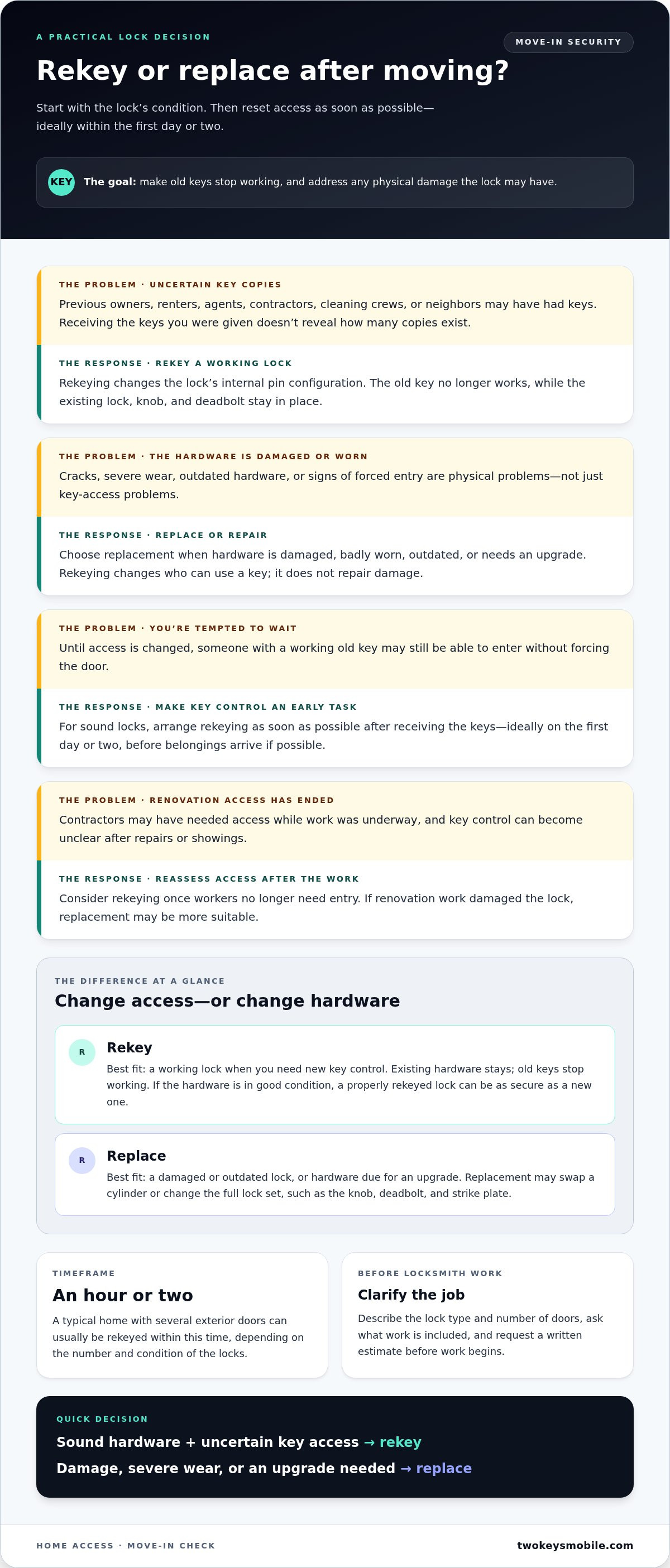
Replacing every lock after a move isn’t always necessary. If you’re deciding when to rekey locks after moving, do it as soon as possible, ideally within the first day or two, if the existing locks are in good condition. Choose replacement instead if a lock is damaged, badly worn, outdated, or shows signs of forced entry.
It’s reasonable to want certainty about who can still enter your new home. You may not know how many copies of the old keys exist or who has them, even if you were told the locks had been changed.
Rekeying changes a lock’s internal configuration so the old key no longer works, while keeping the existing hardware. This guide explains when rekeying is enough, when replacement makes more sense, and how the options compare. You’ll also learn which other entry points and key-control concerns to consider after moving.
Key Takeaways
- Choose rekeying when the lock works well and you want old keys to stop working; replace hardware that’s damaged, worn, or shows signs of forced entry.
- Account for keys held by former owners, agents, contractors, or others, even if you were told the locks had been changed.
- Make key control an early move-in task, and review other entry points and access codes as part of your security check.
- Lost keys or a change in household can be a reason to reassess access and rekey locks that are still in good condition.
Should You Rekey or Replace Your Locks After Moving?
For a functioning lock, rekeying changes which key operates it while keeping the hardware. Choose replacement if the lock is damaged, severely worn, outdated, or needs an upgrade.
Rekeying Existing Locks
Rekeying changes the lock’s internal pin configuration, so the old key no longer works. The existing lock, knob, and deadbolt stay in place, which can preserve the exterior’s style and finish. Rekeying adjusts the lock’s internal pins so it works with a new key. If the hardware is in good condition, a properly rekeyed lock can be as secure as a new one.
Replacing Locks
Replacement means installing new hardware, either by swapping a cylinder or changing the full lock set, such as the knob, deadbolt, and strike plate. It’s the stronger choice when there’s forced-entry damage, cracks, severe wear, or a need to upgrade. Rekeying changes key access, but it doesn’t repair physical damage. A damaged lock may need repair or replacement.
Landlords should treat rekeying between tenants as a standard security practice. Legal requirements vary by jurisdiction, so no single rule applies everywhere.
Locksmith Rekeying Service
A typical home with several exterior doors can usually be rekeyed within an hour or two, depending on the number and condition of the locks. To choose a local locksmith, look for clear business details and recent customer feedback. Describe the lock type and number of doors, ask what work is included, and request a written estimate before work begins.
| Option | Best fit | Hardware kept | Security outcome |
|---|---|---|---|
| Rekey | Working lock, new key control | Yes | Old keys stop working |
| Replace | Damaged or outdated lock | No, or cylinder only | New hardware addresses wear or damage |
Choose rekeying for sound hardware when you need to change key access. Replace locks that are damaged or due for an upgrade.
Why previous owners and others may still have keys
A new home’s keys don’t reveal how many copies exist or who can use them. Until the locks are rekeyed or replaced, old keys may still operate compatible locks.
Keys Kept by Previous Owners
Previous owners may have kept a spare key, and renters may have retained copies after moving out. A key may also remain with someone who once needed access, such as a real estate agent, contractor, cleaning crew, or trusted neighbor. Even receiving every key you were given doesn’t tell you how many copies were made earlier.
For rental properties, rekeying between tenants is a standard practice that helps protect the property owner and incoming tenants. If you’re renting, talk with the landlord or property manager before changing a lock. This clarifies who manages access and avoids changing a lock without the owner’s involvement.
Uncertainty About Key Copies
Key control can become unclear after years of repairs, showings, or household changes. A previous owner, for example, may have lent a key to a neighbor, while a contractor kept one during renovations. You may not know whether those copies were returned or duplicated. Rekeying makes old keys stop operating the lock, even if copies remain in circulation.
Deciding when to rekey locks after moving is straightforward: act as soon as possible after receiving the keys, ideally on the first day or two. For a newly built home, ask the builder how keys were managed and whether the locks were rekeyed before you took possession. A verbal assurance alone doesn’t change which keys operate the locks.
The practical risk of waiting is that anyone with a working old key may still have access. They could enter without forcing the door, leaving no obvious signs of a break-in. Make key control an early move-in task, before belongings arrive if possible.
If you want the existing residential locks reset for new keys, arrange residential rekeying as part of securing the home.
Are Door Locks the Only Security Issue to Check After Moving?
No. Rekeying is one key-control step, but homeowners should also inspect other entry points and review access codes and changes made during renovations.
Rekeying After a Home Purchase
Rekey soon after taking possession, ideally on the first day or two. This limits the time old keys can still operate existing locks. If you move in before the work is done, make it an early task rather than waiting until the first week is over. Even if you were told the locks were changed, rekeying or replacement is what changes which keys work.
Renovations are another reason to reassess access. If contractors come and go over several weeks, consider rekeying after the work ends. This resets key access once workers no longer need entry. Rekeying changes who can operate a lock; replacement is more suitable if renovation work damages the hardware.
Locks Around the Home
Walk around the exterior and list every keyed entry lock, including deadbolts and knob locks on front, back, and side doors. Most standard residential deadbolts and knob locks can be rekeyed. Compatible locks can also be set to work with one key, simplifying access without separate keys for each door.
Don’t stop at the front entrance. Check secondary exterior doors and any keyed door between the home and an attached garage. Note which locks share a key and which require separate keys, then decide where key access needs to change. For a smart lock, identify whether it uses codes or a physical keyway: reset codes on code-based locks, and rekey the keyway on compatible hybrid models.
Inspect windows and other entry points during the same move-in walk-through. The National Crime Prevention Council recommends securing doors and windows and making entry points more resistant to unauthorized access. Check that each window closes and latches and that exterior doors close securely. List repairs separately from rekeying, since changing a key won’t fix a loose latch or damaged frame.
Other reasons to rekey, including lost keys and household changes
Moving isn’t the only reason to change who can operate a lock. Lost keys, a roommate moving out, or a household arrangement ending can make old key access uncertain.
If a key goes missing, consider who could connect it to your address. A key lost near home presents a different concern from one misplaced far away, but either situation can leave access uncertain. Rekeying changes the lock’s internal pin arrangement so the missing key no longer operates it. It’s useful when the existing lock still works and you want to keep its hardware.
A roommate moving out is another clear time to review access. They may have returned their key, but copies could still exist. Rekeying can reset access for everyone, including neighbors or friends who received a spare during the shared arrangement. Knowing when to rekey locks after moving also helps you set a fresh access plan before sharing new keys.
Whether multiple locks can use one key depends on compatibility. Yes, if the locks are the same brand or share the same type of keyway. This can let one key operate compatible deadbolts and knob locks instead of requiring separate keys for each exterior door.
Rekeying changes the cylinder’s internal pin setup while keeping compatible hardware. Replacement works differently: a locksmith can swap the cylinder or replace the full lock set. Choose based on the lock’s condition and whether you want new hardware, not just new key access. Rekeying can be an affordable option when the lock is sound; replacement addresses worn or damaged parts.
Use a simple access reset: identify the locks affected, decide who needs keys, then have compatible locks rekeyed and distribute the new keys deliberately. If a lost key leaves you locked out, an emergency house lockout service helps you regain entry; it doesn’t reset key access by itself.
For new key access after a roommate change or lost key, arrange residential rekeying.
Two Keys Mobile: Automotive Key Replacement
Two Keys Mobile provides Automotive Key Replacement when a vehicle key is lost, damaged, or no longer works. If you’re locked out of your vehicle, its Emergency Vehicle Lockout Service addresses the immediate access problem. These needs are separate from changing the keys that operate your home’s locks.
For a move-related home security task, Two Keys Mobile also provides Residential Rekeying. Choose it when existing residential locks work but you want old keys to stop operating them. The right service depends on the problem: vehicle key replacement addresses car access, while rekeying resets access through compatible home locks. Two Keys Mobile also provides Commercial Lock Installation for business properties.
Contact Two Keys Mobile to discuss the locksmith service that fits your situation.
Make Your New Access Plan Work for You
Turn the move-in decision into a simple access plan. Decide who needs a key, where any spare will be kept, and how you’ll update access when household arrangements change. A short written record can prevent uncertainty later, especially if you lend a key to a neighbor or schedule work at home. Revisit the plan whenever a key is lost or someone’s access ends.
Knowing when to rekey locks after moving is one part of keeping entry control current. Two Keys Mobile offers Residential Rekeying for home locks, as well as Automotive Key Replacement and Emergency Vehicle Lockout Service for vehicle key problems. Choose the service that matches your access issue, then take the next step at a pace that suits your situation.
Contact Two Keys Mobile for lock help and move forward with a clear access plan.
Frequently Asked Questions
What Does It Mean to Rekey a Lock?
Rekeying changes the lock’s pin arrangement so a different key operates it. The lock body stays in place, but the old key no longer works. For example, if a household member loses a key, rekeying can make that key ineffective without requiring a new knob or deadbolt. The replacement key must match the new configuration.
Should You Change the Locks on Every Exterior Door?
Address every exterior door with a keyed lock, but don’t assume each one needs replacement. A working lock may only need its key access changed, while damaged hardware calls for repair or replacement. Include side and back doors in your inspection, not just the main entrance. A window latch or an entry without a keyed lock needs a separate security check.
Should You Rekey a Newly Built Home?
Ask the builder how keys were managed before you took possession, including whether workers used temporary keys and whether the locks were rekeyed. New construction alone doesn’t tell you who may hold copies. If the key history is unclear, treat the home’s access plan as unfinished. Identify any keypad or smart lock too, since its access settings may need resetting rather than pin changes.
Can You Do It Yourself?
You can replace some standard residential locks with basic tools, but rekeying requires a kit made for the lock’s brand and careful handling of small internal parts. First identify the lock brand and model, then decide whether you’re changing hardware or only key access. If the lock won’t turn smoothly after the work, don’t force it. A misassembled lock can prevent normal entry.
How Do You Decide Between Rekeying and Replacing?
Choose based on the lock’s condition and your goal. If the lock works properly and you only need to end access through old keys, rekeying addresses that need. If the cylinder, bolt, or surrounding hardware is damaged or unreliable, replacement addresses the hardware problem too. Replacement may also suit a renovation or style upgrade better than keeping the existing lock.
How Soon After Moving Should You Address the Locks?
Address key access as soon as you take possession, ideally on the first day or two. This gives you a clear starting point before sharing keys or settling into a routine. Two Keys Mobile offers Residential Rekeying for homeowners in Little Rock, North Little Rock, Maumelle, Conway, Sherwood, Jacksonville, Cabot, Beebe, Bryant, Benton, East End, Mabelvale, and Mayflower. Add lock access to your move-in checklist.


