
Replacing every lock isn’t always the first step after buying a home. If you don’t know who still has a key, rekeying the existing exterior locks is a practical option: it changes the lock’s internal configuration so the old keys no longer work. A locksmith for new homeowners can assess whether rekeying suits your doors or whether a worn or outdated lock needs replacement.
It’s reasonable to want control over who can enter your new home, especially if previous owners, tenants, contractors, or others may have had keys. Rekeying gives you new keys without replacing hardware that’s still in good condition.
Learn how rekeying works, when replacing a lock makes more sense, and how deadbolts and entryway upgrades can support everyday security. You’ll also find guidance on choosing locks for doors, gates, patios, garages, and sheds, so you can plan practical next steps for your home.
Key Takeaways
- Rekeying can make existing locks work with new keys, while replacement may suit locks that are worn or need an upgrade.
- Assess each entryway’s lock, door condition, and frame to spot where a security improvement may help.
- Match the lock to the location and how it’s used, since doors, patios, gates, garages, and sheds have different needs.
- Plan your next steps by identifying which locks need rekeying and which entry points may benefit from updated hardware.
Do I need to rekey locks on my new home?
Usually, rekey after buying or moving into a home if you don’t know who has keys. Start with exterior doors, then assess shared entrances.
Rekeying Existing Locks
Rekeying changes a lock’s internal configuration so its previous keys stop working while compatible hardware stays in place. After buying a home or moving into a rental, list each exterior entrance and note its lock type, including deadbolts. A locksmith can assess whether the locks can be rekeyed. This helps address uncertainty about keys held by former owners, tenants, or others.
Rekeying Exterior Locks in One Visit
List the exterior locks together for assessment during one visit: front and back doors, side entrances, and the door leading from an attached garage. The locksmith can determine which locks can use the same new key and which need separate keys. Include every working deadbolt. A patio slider or gate may use a different mechanism, so list it separately.
Rekeying Versus Replacing Locks
Rekeying changes which key operates compatible existing hardware; replacement removes the existing lock and installs different hardware. Choose rekeying when the lock works properly and you want to prevent old keys from opening it. Consider replacement if a lock is damaged or unreliable, or if you want a different type. Homeowners insurance terms vary, so read your policy for lock-related requirements or coverage conditions.
Choosing When to Rekey
Rekey soon after moving in if you’re unsure who has keys, or after a tenant leaves. Before hiring a locksmith, verify licensing through your state’s licensing agency and request proof of insurance. Describe each lock and agree on the work and charges before service. Ask for an itemized estimate before authorizing work, and don’t approve extra work you didn’t request. If you’re locked out, distinguish emergency entry from planned rekeying.
Deadbolt installation and home security upgrades
A deadbolt upgrade can improve an entry when existing hardware is worn or poorly aligned. Before installation, inspect the door, frame, and strike plate together. A strong lock won’t work properly if the bolt misses its opening or the frame shifts.
For a standard deadbolt, test the door while it’s closed. The bolt should extend smoothly into the strike plate without forcing the key or thumb turn. Check for loose screws, damaged wood, and sticking around the latch. These details help determine whether the job needs lock installation, frame repair, or adjustment. Don’t treat a new lock as a fix for a damaged door.
Smart locks add keyless entry options, but they still depend on compatible door hardware and a secure door. Compare the lock’s fit with the existing bore and deadbolt before choosing an upgrade. Consider how household members will enter if the keypad, battery, or connected feature isn’t available. Keep a clear backup-entry plan, and test the physical key if the model includes one.
A handleset combines an exterior grip with a separate deadbolt, so check both parts during installation. The grip should operate smoothly, and the deadbolt should extend fully without pressure on the door. Have the installer check alignment after tightening the hardware. Any guarantee is a separate written term, and it doesn’t replace testing the lock before the work is complete.
Residential locksmith services can assess whether the situation calls for new hardware or a rekey. For a working lock that only needs new keys, residential rekeying may address that need without a full replacement. A lockout service addresses access when someone can’t enter; it doesn’t itself upgrade a deadbolt. Test each entry after installation, with the door open and closed, to confirm the bolt moves freely.
Assessing the security of home entryways
Walk around the home and inspect each entrance, including side doors, basement access, and the door connecting the garage. Note loose hardware, a broken latch, or a door that doesn’t close flush. A locksmith for new homeowners can assess the lock’s condition and help determine whether the issue involves the lock or its alignment.
For lock security standards and deadbolt features, review the manufacturer’s documented grade or testing details. Choose a deadbolt that extends fully into its strike plate and turns smoothly from both sides. Check the bolt and strike plate together, then test the door open and closed. If it sticks only when closed, inspect the door and frame alignment.
Check patio doors and nearby windows, too. Confirm each latch engages and each handle operates without obstruction. Include gates and detached sheds in your walk-through if they provide access to the property or stored equipment. Note the location and condition of any faulty lock so you can prioritize repairs.
Plan household access carefully. Track who receives keys, and make copies only for people who need entry. Don’t leave a spare key in an obvious outdoor hiding place. For a move-in security review, a locksmith for new homeowners can help assess which entry points need attention. A written checklist also makes it easier to update access arrangements when household routines change.
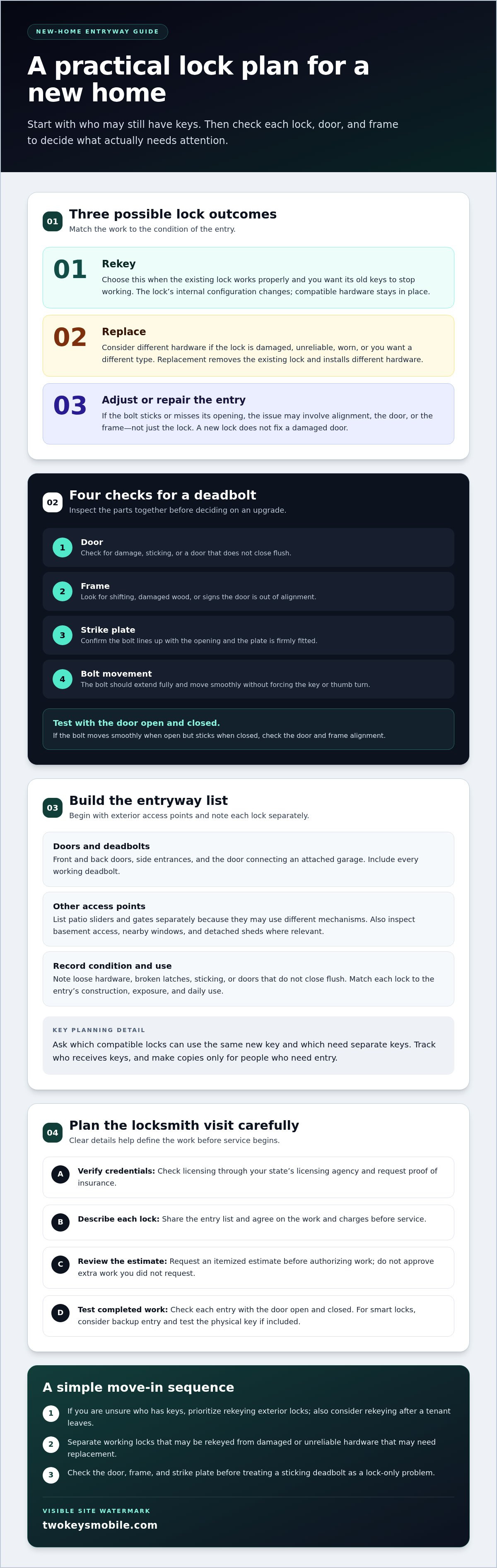
Locks for doors, gates, patios, garages, and sheds
Match each lock to the entry’s construction, exposure, and daily use. A front door, side gate, patio slider, garage, and garden shed each have different access needs. Check how the door or gate closes before selecting hardware. A lock that doesn’t align or latch properly won’t fix a fitting problem.
For hinged exterior doors, choose a lock designed for the door’s thickness and existing cutouts. Check that the latch and deadbolt move smoothly and that the strike plate sits firmly in the frame. A front entry used by the whole household may need a deadbolt and a handle that operate independently. Test both with the door open and closed.
Gates need hardware suited to their material and movement. A metal gate may need a different latch than a wooden side gate. Confirm that the gate closes fully and that the lock is reachable from the intended side. For patio doors, inspect the built-in latch and handle. Sliding panels must stay aligned with their tracks for the lock to engage.
A garage’s main vehicle door and connecting entry door serve different functions. Check each independently, including the interior door’s lock and frame. For a shed, consider the door material, exposure, and how often you access stored tools. The lock should fit without obstructing the door’s movement. Address rust, loose fittings, or a broken latch with suitable lock repair.
Smart locks may suit frequently used entrances, but confirm they’re compatible with the door and existing hardware first. Decide how household members will enter if electronic access fails. Keep a working backup method and test it. A residential locksmith can assess fit and operation, and technicians should test each installed lock before finishing the job.
Make a property list showing the location, lock type, and any sticking or damaged parts. If a faulty entry leaves you locked out, get emergency house lockout help. For a lockout, describe which door is locked and whether its hardware is damaged.
Two Keys Mobile: Automotive Key Replacement
Two Keys Mobile helps new homeowners with residential lock needs and vehicle key problems. If you’re unsure who still has keys to your home, Residential Rekeying changes which keys operate compatible existing locks. If a damaged or missing car key disrupts your move, Automotive Key Replacement addresses that separate access issue.
If you can’t open a home entrance, Emergency House Lockout Service helps restore access. Emergency Vehicle Lockout Service is for car lockouts. These services address different situations, so describe whether the problem involves a home door, a vehicle key, or a vehicle lockout.
Keep the next step simple: identify the lock or key problem and the property involved. Contact Two Keys Mobile for the service that fits, or visit Two Keys Mobile online.
Make Your Home’s Access Plan Part of Moving In
Turn entryway decisions into a simple household access plan. Record which keys open each door, who has copies, and where you keep a spare. Update the record when someone moves out or access needs change. This gives you a clear reference instead of relying on memory during a busy move or urgent lockout.
A locksmith for new homeowners can help when you need to change who can enter your home or restore access to a vehicle. Two Keys Mobile offers Residential Rekeying, Automotive Key Replacement, and Emergency Vehicle Lockout Service. Choose the service that matches your situation, then share the relevant details when you reach out.
Take the next step at your pace. Contact Two Keys Mobile to discuss the locksmith service you need. A clear access plan helps you settle in with greater confidence.
Frequently Asked Questions
How long does it take to install a lock?
Timing depends on the lock type, door condition, and whether the hardware fits the existing opening. Most lock repair or replacement jobs take 1-2 hours, depending on complexity. A new lock may need adjustments if its dimensions differ from the old hardware. Tell the locksmith whether the door already has a compatible cutout and whether the frame needs attention.
How much does a residential locksmith cost in Albuquerque, NM?
Residential locksmith pricing in Albuquerque depends on the service and the work involved. The price depends on the case and is given after a quote request; factors include rekeying, repair or replacement, the number of locks, and any needed adjustments. Albuquerque pricing doesn’t establish costs in central Arkansas. Two Keys Mobile serves Little Rock, North Little Rock, Maumelle, Conway, Sherwood, Jacksonville, Cabot, Beebe, Bryant, Benton, East End, Mabelvale, and Mayflower.
Should a broken lock be fixed or replaced?
Repair may suit a lock with a minor, identifiable fault, such as a loose fitting or sticking mechanism, if the rest remains serviceable. Replacement makes more sense when the lock is badly damaged, unreliable, or no longer fits your security needs. Note whether the key turns, the latch catches, and the door closes properly. Those details help identify whether the fault lies in the lock or its alignment.
Why should new homeowners rekey or replace locks after closing?
New homeowners may not know who still has a working key. Previous owners, household members, contractors, or others with access during the sale may have copies. Rekeying changes which keys operate compatible locks; replacement changes the hardware, too. Choose based on the lock’s condition and whether you want different hardware. After closing, keep a record of new keys and who receives them.
Which entry points should new homeowners secure, including garage and patio doors?
Include every route into the home, not just the front door. Check the back and side doors, basement entrances, the door between the garage and living space, and patio or sliding doors. Also inspect gates and detached sheds if they provide access to stored equipment or the property. Test each lock and latch, and note any door that doesn’t close or secure properly.


