
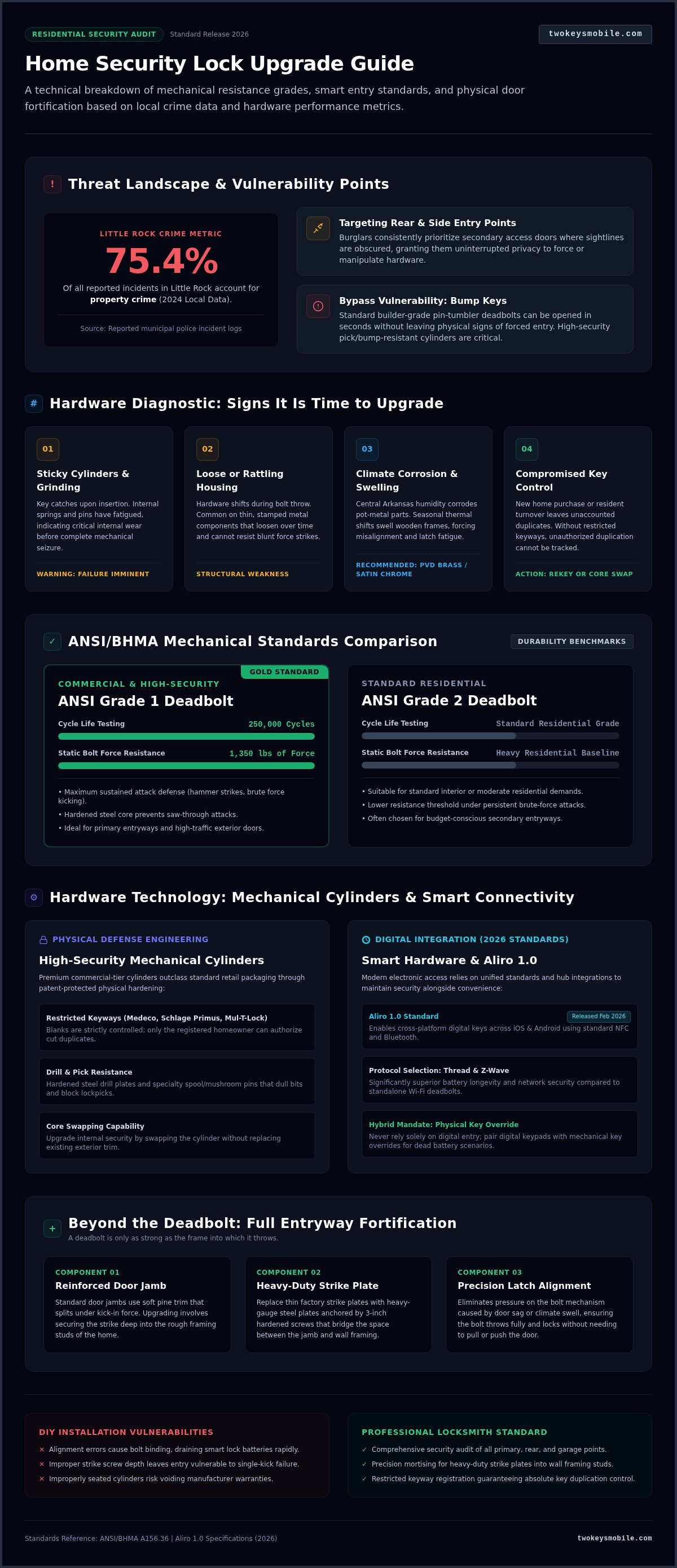
Did you know that property crime accounts for 75.4% of all reported incidents in Little Rock? It's a sobering reality for many local homeowners who feel vulnerable behind loose, aging hardware. If your deadbolt rattles when you turn the key, it's time to prioritize a home security lock upgrade. Don't guess which gadgets are worth the investment or worry about overpaying for hardware that doesn't actually stop a determined intruder.
We know the choice between high-security mechanical locks and the latest smart tech feels overwhelming. This guide simplifies the process by highlighting the best hardware options and professional strategies to harden your home's defenses in 2026. Gain a clear understanding of ANSI security grades, learn how the new Aliro 1.0 standard makes smart locks more reliable, and discover when it's smarter to rekey your existing cylinders instead of replacing them. Get the facts needed to protect your property without the stress of DIY guesswork.
Key Takeaways
- Learn to identify physical warning signs like sticky cylinders and loose housing that indicate your hardware is nearing failure.
- Understand the critical differences between ANSI Grade 1 and Grade 2 ratings to select the most durable hardware for your property.
- Discover why a professional home security lock upgrade involves strengthening the door jamb and strike plate, not just replacing the deadbolt.
- Recognize how professional installation prevents common DIY alignment errors that can void hardware warranties and compromise security.
- Develop a phased security plan by conducting a home audit to prioritize high-traffic entry points and vulnerable secondary doors.
Recognizing the Signs: When Is It Time for a Home Security Lock Upgrade?
Does your key catch every time you try to enter? A sticky cylinder isn't just a minor nuisance; it's a warning. Internal components like springs and pins eventually fatigue. When the housing feels loose or the cylinder grinds, the hardware is failing from the inside out. A home security lock upgrade ensures you aren't left stranded during a lockout or, worse, vulnerable to a forced entry because a worn latch failed to engage. Don't let a polished finish fool you. Many builder-grade locks use thin, stamped metal components that look great but offer little resistance to brute force.
Security isn't always about mechanical failure. It's often about access. If you've recently moved into a new Little Rock property or experienced a change in household residents, you have no way of knowing how many duplicate keys are in circulation. Regaining key control is a primary reason to consider an immediate hardware change. Understanding the deadbolt lock mechanism is vital here. If the bolt doesn't extend fully or lacks a hardened steel core, it's a decorative piece, not a security feature.
The Arkansas Climate Factor
Central Arkansas humidity is a silent killer for cheap hardware. Many retail-grade locks use pot-metal internals that corrode quickly in our swampy summers. This corrosion leads to seized pins and brittle latches. Additionally, Little Rock's dramatic temperature shifts cause wooden door frames to swell and shrink. If you have to pull or push on your door to get the bolt to throw, the alignment is off. This puts immense pressure on the lock and leads to premature failure. We recommend weather-resistant finishes like PVD-coated brass or satin chrome to withstand the elements and maintain smooth operation.
Security Breaches and Neighborhood Trends
Property crime accounts for approximately 75.4% of all reported incidents in Little Rock. Local data from 2024 shows that burglars often target rear or side entries where they have more privacy to work. Standard locks are frequently bypassed using bump keys, which are specially cut keys that can open most common cylinders in seconds. If your neighborhood is seeing an uptick in activity, upgrading to pick-resistant cylinders is no longer optional. A single deadbolt on the front door isn't enough if your patio or garage entries remain vulnerable to these modern bypass techniques.
Modern Lock Technologies: A Roundup of High-Security Options
Choosing hardware for a home security lock upgrade requires looking past the shiny packaging. You need to understand how the hardware performs under pressure. Professional locksmiths rely on ANSI/BHMA lock grades to determine a lock's durability. Grade 1 is the gold standard for residential security. These deadbolts are tested to withstand 250,000 cycles and a 1,350-pound static force against the bolt. Grade 2 is suitable for heavy residential use, but for maximum protection in high-traffic areas, Grade 1 is the superior choice. It's the difference between a lock that survives a few hammer strikes and one that stands firm against a sustained attack.
High-security mechanical cylinders provide a level of physical defense that standard retail locks cannot match. Brands like Medeco, Schlage Primus, and Mul-T-Lock use restricted keyways. This means you are the only person who can authorize a key duplication. These cylinders also feature drill-resistant plates and pins made of hardened steel. If a burglar tries to drill out the core, the bit will simply dull or snap. If you aren't ready for a full replacement, you can often achieve better security by swapping the internal cylinder. You can find more detail on these options in our guide to The Real Cost to Rekey Locks.
Smart Locks and Hybrid Systems
Modern technology has finally caught up with physical security needs. The release of the Aliro 1.0 standard in February 2026 has revolutionized how we use digital keys. This protocol allows your smart lock to work seamlessly across both iOS and Android devices using NFC and Bluetooth. When selecting a smart system, prioritize Z-Wave or Thread protocols if you have a dedicated home automation hub. These options generally offer better battery life and security than standard Wi-Fi locks. If you're in Sherwood or Maumelle, our mobile locksmith technicians can help you select a model that fits your existing door prep.
Never sacrifice a physical key override for pure convenience. Electronic components can fail, and batteries eventually die. A hybrid system that combines a keypad with a high-security mechanical cylinder offers the best of both worlds. Biometric scanners have also improved significantly in 2026. New 3D facial recognition and palm vein readers are now reliable enough to handle the dirt and humidity common in Central Arkansas. These keyless entry pads are ideal for families who want to grant temporary access to service providers without handing out a physical key.
Beyond the Deadbolt: Strengthening Your Entry Points
Even the most expensive lock is useless if the door frame collapses during a kick-in. Most homeowners focus on the hardware but ignore the strike plate, which is the metal piece where the bolt enters the frame. In standard builder-grade homes, these plates are secured with short half-inch screws that only grip the decorative trim. One solid kick and the wood splinters instantly. According to FBI burglary statistics, forced entry remains a primary method for residential break-ins. A proper home security lock upgrade must include 3-inch hardened steel screws that anchor the strike plate directly into the wall studs.
Reinforcement plates provide another essential layer of defense. These metal wraps fit around the door itself, preventing the wood from splitting near the lockset under pressure. For secondary entries, consider adding sash jammers or floor-mounted bolts. These components add a second point of resistance that a burglar won't expect, forcing them to spend more time making noise and increasing the chance they'll be caught. It's about building a system of defenses, not just relying on a single piece of metal.
Professional Deadbolt Installation
Alignment is everything. If your door isn't perfectly centered, the bolt won't extend fully into the frame. Many DIYers force the lock closed, which prevents the internal deadlocking mechanism from engaging. This makes the lock easy to shim or bypass with simple tools. If you're searching for Deadbolt Installation Near Me, look for technicians who prioritize precision drilling. A single misaligned hole can ruin your door's structural integrity and leave you with a false sense of security.
Reinforcing Sliding Glass Doors
Sliding doors are notoriously easy to lift off their tracks or bypass with a screwdriver. Standard latches are often made of weak aluminum that snaps under minimal force. We recommend installing auxiliary charlie bars or foot-operated locks to physically block the door from moving. For a modern upgrade, apply security film to the glass. This invisible layer holds the glass together even after a heavy impact, preventing the quick smash and grab entries common in urban areas. It's a simple way to harden a major vulnerability without changing the look of your home.
The DIY vs. Professional Installation Debate
Thinking about installing that new deadbolt yourself? It's a common trap. While big-box retailers market locks as easy 10-minute projects, the reality is often a poorly fitted "scam" that compromises your safety. If the lock doesn't sit perfectly flush against the door, you've left gaps that make picking or shimming significantly easier. A home security lock upgrade is only as effective as its installation. Professional locksmiths use specialized tools for mortising and precision drilling. This ensures the hardware integrates with the door's structure rather than just hanging on the surface. When a technician with 12+ years of experience handles the job, you avoid the misalignments that lead to jammed motors and broken keys.
Warranty protection is another critical factor. Many high-end hardware manufacturers require professional installation to honor their performance guarantees. If you botch a DIY install and the lock fails, you're out of luck and money. Choosing a mobile service allows you to secure every entry point in a single visit. Whether you're in Maumelle, Conway, or Bryant, having a professional evaluate your door's integrity saves you from the frustration of recurring hardware issues. If you want the job done right the first time, contact our mobile locksmith team for a precise installation.
When Rekeying is the Smarter Move
You don't always need to buy new hardware to improve your security. In many cases, your existing locks are physically sound but the key control has been compromised. Professional rekeying involves changing the internal pins so old keys no longer work. This is often a fraction of the cost of a full hardware swap. It's also the best way to maintain a master key system in larger Little Rock homes, allowing one key to open everything while guest keys only open specific doors. Check out our Professional House Rekey Service Near Me guide to see which option fits your budget.
Avoiding Locksmith Scams in Central Arkansas
Be wary of out-of-state call centers that use "bait and switch" pricing. These companies often quote a low dispatch fee and then inflate the price by hundreds of dollars once they arrive. Real security comes from local experts with a verifiable track record. Always look for mobile branding on the vehicle and technicians who are transparent about their processes. A reputable local pro will have years of experience in the Greater Little Rock area and will provide a clear, honest quote before any work begins. Don't let an unverified "technician" drill into your expensive doors without checking their credentials first.
Creating a Phased Upgrade Plan for Your Home
Protecting your home shouldn't be a guessing game. You need a methodical roadmap to address vulnerabilities without blowing your budget. A comprehensive home security lock upgrade works best when it's executed in phases. Start by identifying the most frequently used entry points. Your front door and the door leading from the garage to the house are your primary lines of defense. If you can only afford one high-grade lock this month, put it on the front door. It's far better to invest in one ANSI Grade 1 deadbolt that actually stops an intruder than four flimsy Grade 3 locks that provide nothing but a false sense of security.
Security is a long-term commitment, not a one-time purchase. Once your new hardware is installed, schedule professional maintenance once a year. Central Arkansas humidity can gum up even the best cylinders. A quick application of graphite lubricant and a strike plate alignment check will keep your defenses sharp. This proactive approach prevents emergency lockouts and ensures your warranty remains valid for years to come.
Step 1: The Perimeter Audit
Walk around your property and physically test every opening. Grab the door handle and shake it while it's locked. If there's significant "play" or rattling, the bolt isn't seating correctly in the strike pocket. This gap is exactly what a burglar needs to insert a pry bar. Next, verify your bolt throw. Every exterior door should have at least a 1-inch throw deadbolt to resist jimmying. Finally, think about your keys. If you can't account for every copy given to previous owners, contractors, or former tenants, your physical hardware is already compromised. In these cases, rekeying is your first priority.
Step 2: Choosing Your Hardware Strategy
Decide whether you want a unified smart ecosystem or high-security mechanical locks. Smart locks offer convenience and audit trails, while mechanical cylinders from brands like Medeco provide unmatched physical resistance. Consult with a mobile locksmith to check the compatibility of your existing doors. Historic homes in Little Rock's Quapaw Quarter often have narrow stiles that won't accept standard modern deadbolts without custom modifications. Once you've picked your hardware, always request a flat-rate quote. Professional technicians provide transparent pricing upfront, ensuring you aren't hit with "labor surprises" after the work is finished.
Take Action to Secure Your Little Rock Property
You now have the technical roadmap to transform your property from a soft target into a hardened fortress. By prioritizing ANSI Grade 1 hardware and reinforcing vulnerable strike plates with 3-inch screws, you've already outpaced standard builder-grade security. Remember that a successful home security lock upgrade relies on mechanical precision. Even the most advanced smart lock fails if the door alignment is off or the internal housing isn't seated correctly. True protection is about the synergy between high-quality metal and expert installation.
Don't leave your family's safety to chance or unverified DIY tutorials that compromise your hardware warranty. We bring over 12 years of local expertise directly to your driveway with a lowest price guarantee on all professional installations. Our mobile technicians arrive in 30 minutes or less to handle everything from rekeying to high-security deadbolt fitting. Secure your home today with Two Keys Mobile; click here for a professional lock upgrade quote! You deserve the peace of mind that comes with knowing your property is protected by the most reliable hardware and technical skill available in 2026.
Frequently Asked Questions
Is it better to rekey or replace my locks for a security upgrade?
Rekeying is the best choice if your current hardware is structurally sound but you've lost track of who has copies of your keys. This process changes the internal pins so old keys no longer function. However, if you want to improve physical resistance against forced entry, a full home security lock upgrade to ANSI Grade 1 hardware is necessary. Replacement allows you to move from builder-grade materials to drill-resistant steel components.
Can I install a smart lock on an old door in Little Rock?
Yes, you can install modern smart locks on older doors, but professional alignment is mandatory. Historic properties in neighborhoods like Hillcrest or the Quapaw Quarter often feature narrow stiles or non-standard thicknesses. These doors require precise mortising to ensure the new bolt aligns perfectly with the existing frame. Without this precision, the smart lock motor will likely jam or fail due to the significant humidity shifts common in Central Arkansas.
What is the most secure lock brand for residential homes in 2026?
Professional locksmiths generally recommend brands like Medeco, Mul-T-Lock, and Schlage for high-security applications. Specifically, look for models that carry an ANSI Grade 1 certification. These brands offer restricted keyways that prevent unauthorized duplication and feature hardened steel inserts to defeat drilling attempts. In 2026, the most secure options often include hybrid systems that combine a physical Grade 1 deadbolt with an encrypted digital interface following the Aliro 1.0 standard.
How much does a professional home security lock upgrade cost?
The total investment depends on the number of entry points and the grade of hardware you select. High-security mechanical cylinders and smart locks represent different price tiers for hardware. Labor varies based on the complexity of the installation, such as whether your doors require fresh boring or frame reinforcement. Choosing a local mobile service with a lowest price guarantee ensures you receive professional results without the overhead costs associated with a physical storefront.
Do smart locks work during a power outage or Wi-Fi failure?
Most modern smart locks operate on battery power, so they remain functional during a local electrical outage. If your Wi-Fi goes down, you can still gain entry using a physical key override, a keypad code, or a local Bluetooth connection. The 2026 Aliro standard also allows for proximity unlocking via NFC, which doesn't rely on an active internet connection. Always choose hardware with a physical key cylinder to ensure you're never locked out during technical failures.
What makes a lock 'pick-resistant' or 'drill-resistant'?
Pick-resistance comes from complex internal pin configurations, such as spool or serrated pins, which make it difficult for a burglar to feel when the lock is "set." Drill-resistance is achieved by embedding hardened steel plates or ceramic pins within the lock body. These materials are designed to dull or snap drill bits before they can reach the core mechanism. These features are standard in high-security cylinders but are rarely found in cheap, retail-grade hardware.
How often should I upgrade my home's security hardware?
You should evaluate your hardware every 7 to 10 years or whenever you notice signs of physical wear. In Little Rock, high humidity can accelerate internal corrosion, leading to "sticky" cylinders that eventually seize. Technological shifts also play a role; for example, the 2026 launch of the Aliro standard made older smart locks less secure and harder to integrate. Regular maintenance and periodic hardware reviews ensure your home's defenses remain effective against modern bypass techniques.
Can a mobile locksmith install hardware I bought online?
Our technicians can certainly install hardware you've purchased yourself, provided it's compatible with your door's current preparation. This is a convenient option for homeowners in Maumelle or Bryant who have specific smart home ecosystems in mind. However, keep in mind that we cannot provide a hardware warranty for items bought through third-party retailers. We recommend consulting with a professional before purchasing to ensure the hardware meets ANSI Grade 1 standards and fits your door's thickness and backset.


