
A locked doorknob can feel like enough, but it isn’t designed to do the same job as a deadbolt. The difference between deadbolt and knob lock comes down to how each secures the door: a knob lock uses a spring-loaded latch, while a deadbolt extends a solid bolt into the doorframe. A deadbolt adds a separate locking point, while a knob lock provides convenient latching and everyday access.
If you’re unsure whether a knob lock is sufficient for an exterior door, start by considering the door, its hardware, and how it’s used. This guide explains how both mechanisms work, where each makes sense, and what to consider before upgrading. You’ll also learn how to spot potential fit issues and when installation or rekeying can help. Two Keys Mobile provides residential lock installation and rekeying on-site in Little Rock, North Little Rock, Maumelle, Conway, Sherwood, Jacksonville, Cabot, Beebe, Bryant, Benton, East End, Mabelvale, and Mayflower.
Key Takeaways
- The difference between deadbolt and knob lock is in the locking mechanism, and each serves a distinct purpose even when both are fitted to one door.
- A locking doorknob and a deadbolt aren’t interchangeable when securing an exterior entry.
- Match the lock to the door’s purpose, privacy needs, existing hardware, and daily use.
- Check for worn hardware or misalignment before replacing a lock, since door condition can affect fit and operation.
- Professional installation or rekeying can help when you need a lock fitted to the door or want to change which key operates it.
Deadbolt vs. knob lock: what is the difference?
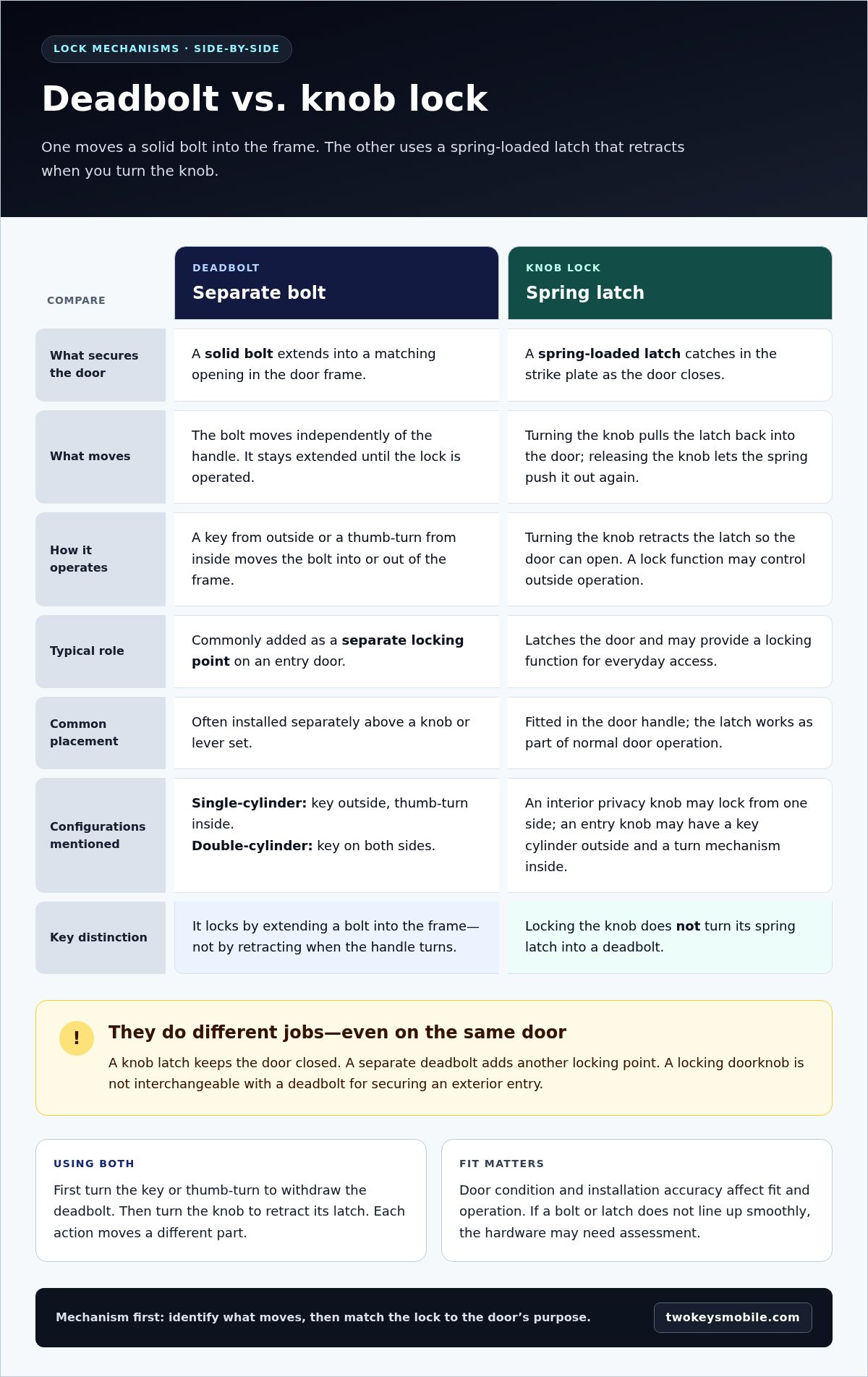
A deadbolt secures a door with a solid bolt that extends into the door frame. A knob lock typically uses a spring-loaded latch that moves when you turn the knob. These are different mechanisms, not two names for the same lock. A door can have both: the knob latch keeps it closed, while a separate deadbolt adds another locking point.
Understanding the difference between deadbolt and knob lock starts with what moves inside the hardware. A latch can slide back when pressure is applied to its angled edge. A deadbolt doesn’t retract that way. It stays extended until someone operates the lock.
What makes a deadbolt different?
Turn a key from outside or a thumb-turn from inside, and the deadbolt moves into or out of a hole in the door frame. When extended, it helps hold the door closed without relying on the spring action used by a latch. You may see single-cylinder deadbolts, operated by a key outside and a thumb-turn inside, or double-cylinder versions that use a key on both sides. The deadbolt overview explains these common types and their distinction from spring bolts.
Deadbolts are commonly installed as a separate lock on entry doors, often above a knob or lever set. That separate placement matters: the deadbolt and knob lock can each be operated independently, even though they secure the same door.
How does a knob lock work?
Turn the knob and its spring-loaded latch retracts into the door, letting it swing open. Release the knob, and the spring pushes the latch back out. As the door closes, the latch’s sloped edge meets the strike plate and slides inward, then springs into the opening. That familiar click is the latch catching, not a deadbolt extending.
A knob lock can still have a locking function. Depending on the design, locking it stops the outside knob from turning or retracting the latch, while the inside knob remains operable. The latch itself is still different from a deadbolt: it is spring-loaded and designed to retract as part of normal door operation.
- Mechanism: A deadbolt moves a solid bolt into the frame; a knob lock uses a spring-loaded latch.
- Typical role: A deadbolt is commonly added as a separate lock on an entry door; a knob lock latches the door and may provide a locking function.
- Operation: A key or thumb-turn moves a deadbolt; turning a knob retracts its latch, while the lock function controls whether the knob can operate from outside.
Keep these roles distinct when identifying the hardware on your door. The presence of a locking knob doesn’t mean the door has a deadbolt, and installing both doesn’t make their mechanisms interchangeable. Choose based on what the door needs to do, not just on the appearance of its hardware.
How deadbolts and knob locks operate, and why the difference matters
A lock’s outside appearance doesn’t show exactly what moves inside it. To understand the difference between deadbolt and knob lock, follow the hardware as you lock the door, unlock it, and turn the handle. The key distinction is whether the locking part moves independently or retracts as part of opening the door.
What happens when you turn a deadbolt?
Turning a key or inside thumb-turn moves the deadbolt through the lock body and into a matching opening in the door frame. Reverse the turn, and the bolt withdraws into the door. The handle doesn’t operate this movement. You can retract the deadbolt while leaving the handle still, or turn the handle after the deadbolt is retracted to open the door.
This is a separate action from the ordinary latch. How well a deadbolt performs depends on the lock, the door, and how accurately the hardware is installed. A grade can also help describe a lock’s tested performance; ANSI/BHMA lock grades provide a framework for comparing durability, strength, security, and operation.
What happens when you turn a knob lock?
Turning the knob rotates the mechanism and pulls its spring-loaded latch back into the door. That clears the door frame so the door can open. Let go of the knob, and the spring returns the latch to its extended position. The latch is designed to move as the handle turns; it isn’t the same part as a deadbolt.
Knob-lock configurations vary. An interior privacy knob may lock from one side, while an entry knob may have a key cylinder outside and a turn mechanism inside. The exact lock function differs, but turning the knob still retracts the latch. Locking the knob affects whether it can be operated as intended; it doesn’t turn its latch into a deadbolt.
In short: a deadbolt moves separately into the frame to lock the door, while a knob retracts its spring latch to let the door open.
Picture coming home with both types on the same door. You turn the key or thumb-turn to withdraw the deadbolt, then turn the knob to retract its latch. Each action moves a different part. If the deadbolt remains extended, the knob may turn without opening the door; if the deadbolt is retracted, the latch still needs to clear the frame.
That distinction helps you identify what a lock is doing instead of judging it by appearance alone. If the door sticks, the bolt or latch doesn’t line up smoothly, or replacement hardware may not fit, a professional assessment can help. Residential lock installation from Two Keys Mobile addresses fit and operation on-site, so the hardware works with the door.
Is a deadbolt more secure than a knob lock?
For an exterior entry, a deadbolt generally adds a separate locking point that a standard knob lock doesn’t provide. But that doesn’t make every deadbolt setup secure by default, or every knob lock useless. A locking knob can control access, yet its latch and locking function aren’t a substitute for a properly fitted deadbolt. The difference between deadbolt and knob lock matters because each plays a different role in the door’s overall security.
When does a deadbolt add a useful layer?
A deadbolt can add a useful layer on an exterior door because it engages the frame separately from the knob’s latch. For that benefit, the bolt needs to extend fully into the frame opening when locked. If the door has shifted, the hardware is worn, or the bolt and opening don’t align, operation may be difficult or incomplete. A deadbolt is one component, not a promise that a door can’t be forced open.
Why should a knob lock not be the only comparison?
A knob’s latch is primarily there to hold a closed door in place during normal use. Its lock function may limit operation from outside, depending on the design, but it doesn’t change the latch into a separate deadbolt. Knob locks still need to work correctly: loose, damaged, or poorly aligned hardware can affect everyday operation and access control.
Assess the whole entry, not just the lock you can see. A deadbolt can’t make up for a door that doesn’t close properly or a frame that prevents the bolt from engaging. Hardware condition matters too. A sticking key, loose knob, or bolt that stops short may signal a fit or maintenance issue that needs attention before you rely on the lock.
Use these checks to think through the setup:
- Door purpose: Is it an exterior entry that needs a separate locking point, or an interior door used mainly for privacy?
- Engagement: Does the deadbolt move smoothly and seat fully in the frame when the door is closed?
- Condition: Are the lock, door, and frame stable, with no sticking or looseness that affects operation?
Security comes from how the door, frame, and hardware work together. A deadbolt may be a practical addition to an entry, while a knob lock may suit an interior door’s everyday needs. Neither should be judged in isolation or treated as a universal answer. Two Keys Mobile can assess the door and frame on-site and install residential lock hardware suited to the door’s condition.
How to choose between a deadbolt and knob lock for each door
Start with the door’s job. An exterior entry needs a different setup from a bathroom or bedroom, where privacy and easy daily use may matter more. Consider who uses the door, what level of access control makes sense, which hardware is already installed, and whether the door is prepared for the lock you want. The difference between deadbolt and knob lock helps you choose a function, not just a style.
Exterior entry: A knob or handle operates the latch; a separate deadbolt can provide an additional locking point. Check the door’s construction, existing holes, and frame alignment before selecting hardware.
Bedroom: A privacy knob or lever may suit a room where the main need is everyday privacy. Household preferences and the existing door preparation can affect the right choice.
Bathroom: Privacy hardware is often the practical starting point. Consider who may need access in an emergency and choose a mechanism that fits the household’s needs.
Other interior doors: A passage knob or lever may be enough for a closet, hallway, or room that doesn’t need a lock. Match the hardware to how the door is used.
Which lock setup suits an exterior entry door?
For an exterior entry, the handle or knob typically operates the latch, while a deadbolt works as a separate lock. Using both lets each piece serve its own function. Before choosing a replacement or adding a deadbolt, look at the door material, existing openings, and the space available in the frame. The suitable hardware depends on the individual door and how it’s prepared.
Don’t assume every door can take the same lock without adjustment. If the door is older, has been modified, or doesn’t close smoothly, fit may need attention. Two Keys Mobile provides on-site residential lock installation across Little Rock, North Little Rock, Maumelle, Conway, Sherwood, Jacksonville, Cabot, Beebe, Bryant, Benton, East End, Mabelvale, and Mayflower. A technician can assess the door and install hardware suited to its condition.
Which lock belongs on an interior door?
Interior choices are often about privacy and routine rather than securing an outside entrance. A bedroom may benefit from a privacy lock, while a closet or hallway door may only need a latch. A knob lock can suit some interior uses, but household needs differ. Consider whether children, guests, or other household members need reliable access, then check what the existing door can accommodate.
Keys matter too. If you’ve moved into a home, lost track of who has copies, or want to change access without replacing the lock, residential rekeying may be an option. Rekeying changes which key operates a compatible lock; it doesn’t change the door’s hardware setup. Choose based on both the door’s function and who should have access.
Two Keys Mobile provides on-site residential lock installation to help match hardware to the door and confirm that it operates properly.
When a locksmith can help with deadbolt or knob lock installation
A door that’s hard to lock or a deadbolt that doesn’t seem to fit can benefit from a locksmith’s assessment. The same applies when a bolt or latch doesn’t line up, hardware feels loose or worn, or you’re unsure whether the door is prepared for the lock you want. These issues can affect everyday operation. An assessment helps clarify whether the existing hardware needs attention or a different lock setup may suit the door.
What does a locksmith assess before installation?
A locksmith starts with the door and frame, then checks the existing hardware, openings, and alignment. For example, a deadbolt that catches only when you lift or push the door may not be engaging smoothly. The assessment helps determine an appropriate lock and installation approach based on the door’s condition. It also identifies fit concerns before work begins, rather than assuming new hardware will match the existing preparation.
A straightforward installation process typically includes:
- Assess: Inspect the door, frame, hardware, and how the lock currently operates.
- Select: Identify a suitable lock and installation approach for the door’s purpose and preparation.
- Install: Fit the hardware and align its working parts with the door and frame.
- Test: Operate the lock and handle with the door open, then closed, to check that each moves and engages as intended.
This final test matters. A lock may move freely while the door is open but bind once the door meets the frame. Testing both positions helps reveal alignment or operation issues before the job is complete. It also gives you a chance to understand how the lock works during normal use.
How can Two Keys Mobile help in Central Arkansas?
Two Keys Mobile provides mobile residential lock installation and rekeying in Little Rock, North Little Rock, Maumelle, Conway, Sherwood, Jacksonville, Cabot, Beebe, Bryant, Benton, East End, Mabelvale, and Mayflower. Its technicians each have more than 12 years of industry experience. If you’re weighing the difference between deadbolt and knob lock options, an on-site assessment connects that choice to the door’s condition, existing hardware, and daily use.
Rekeying may be useful when you want to change which key operates a compatible existing lock, such as after moving or changing who has access. It changes the lock’s keying, not the physical lock type. Two Keys Mobile provides residential rekeying as well as lock installation, so you can choose the service that addresses the issue with your door or keys.
If a lock is sticking, worn, or doesn’t fit the door, contact Two Keys Mobile for residential installation or rekeying. A technician can assess the door on-site and help identify a practical next step.
Choose a next step that fits your home
Before changing a lock, decide what you want to improve: smoother operation, clearer control over who has a key, or a different locking setup. Choose one priority for each door. That keeps a hardware decision tied to daily use rather than appearance alone.
Notice how each door behaves. Does it close without pressure? Does the key turn consistently? Has access changed since you moved or shared keys? These details help clarify whether installation or rekeying is the more relevant step. The difference between deadbolt and knob lock matters most when it guides a decision that fits the actual door and household.
For on-site residential lock installation or rekeying in Little Rock and nearby Central Arkansas communities, contact Two Keys Mobile to discuss the right next step for your home.
Frequently Asked Questions
Is a deadbolt safer than a knob lock?
A deadbolt can add a separate locking point, but neither lock makes an entry secure on its own. The difference between deadbolt and knob lock is only one part of the decision; also consider whether the door closes firmly, the frame is sound, and the hardware works smoothly. For example, a bolt that doesn’t fully engage because the door has shifted may not function as intended. Assess the complete setup.
Can a knob lock be used without a deadbolt?
Yes, a knob lock can latch and lock a door without a deadbolt, but whether that setup suits the door depends on its location and use. For an exterior entry, consider whether a separate locking point is appropriate for your household. Don’t rely on hardware that sticks, feels loose, or fails to latch consistently. Those symptoms can point to a fit or wear issue that needs attention.
Do I need both a deadbolt and a knob lock?
Not for every door. An exterior entry may use a handle or knob for everyday opening and a deadbolt as a separate lock; an interior door may need privacy hardware instead. Think about who uses the door and how often it’s opened. Also consider whether the existing holes and door thickness can accommodate your preferred setup. If the door has been altered, have the preparation assessed before choosing hardware.
Does a deadbolt replace the knob lock?
Usually, no. A deadbolt typically doesn’t provide the handle function needed to open and close the door, so the existing knob or lever may still be needed. Before replacing hardware, identify which parts are currently installed and how they work together. For instance, changing only the deadbolt won’t address a loose handle or a latch that fails to catch. Match the replacement to the specific problem.
Can I install a deadbolt in a door that only has a knob lock?
It may be possible, but the door and frame determine the installation approach. Existing holes, construction, and alignment all affect whether additional hardware can be fitted properly. Avoid buying a lock based only on how it looks or assuming its measurements match your door. Two Keys Mobile provides residential lock installation and can assess the door preparation, fit the hardware, and test its operation.
Should I replace or rekey a knob lock when I move?
Rekeying may suit you if the existing lock works properly and you want to change which key operates it. Replacement may be preferable if the hardware is damaged or you want a different lock. For example, a sticky knob may need more than a key change. Two Keys Mobile provides residential rekeying and lock installation in Little Rock and surrounding communities.
Can a locksmith install a deadbolt and knob lock together?
Yes. Two Keys Mobile provides mobile residential lock installation and can assess whether the door and frame support using both types together, then install and test the hardware. Service is available in Little Rock, North Little Rock, Maumelle, Conway, Sherwood, Jacksonville, Cabot, Beebe, Bryant, Benton, East End, Mabelvale, and Mayflower. Contact Two Keys Mobile to arrange on-site residential lock help.


