
Pulling harder can turn a stuck key into a broken one. If you have a key stuck in a door lock, pause before twisting or yanking it. The cause could be a worn or bent key, a binding lock cylinder, or pressure from a door that isn’t aligned properly. A car-door lock adds another consideration, especially if the key has electronic components. Start with a calm check rather than force.
You may need the key out quickly, particularly if it’s blocking access to your home or vehicle. This guide explains what you can safely try, how to spot clues that the key, cylinder, or door alignment may be involved, and when to stop to avoid damage. You’ll also learn how a stuck key in a car door can differ from one in a house door, and when on-site locksmith help is the safer next step.
Key Takeaways
- If you have a key stuck in door lock, start with gentle checks and avoid force or improvised tools.
- A worn key, cylinder wear, debris, and pressure on the door or latch can cause similar symptoms, so one clue may not reveal the cause.
- A car-door key problem isn’t automatically an ignition issue. The right checks depend on which lock is affected.
- Stop if gentle movement doesn’t work or the key looks bent or damaged. Note whether it turns, catches, or bends.
- Mobile automotive and residential locksmith help is a practical next step when the key remains stuck or the lock may be damaged.
Key Stuck in a Door Lock? Start With These Safe Checks
Before pulling harder, twisting sharply, or reaching for a tool, identify what the key is doing. A key that won’t turn needs a different response from one that turns but won’t come out, and neither symptom alone confirms the cause. Steady the door, ease any pressure on the latch, then test the key with light, controlled movement.
Door locks have internal parts that need to move together for a key to operate smoothly. This basic overview of how door locks work helps explain why forcing a key may strain those parts instead of freeing it.
What to try before turning or pulling the key
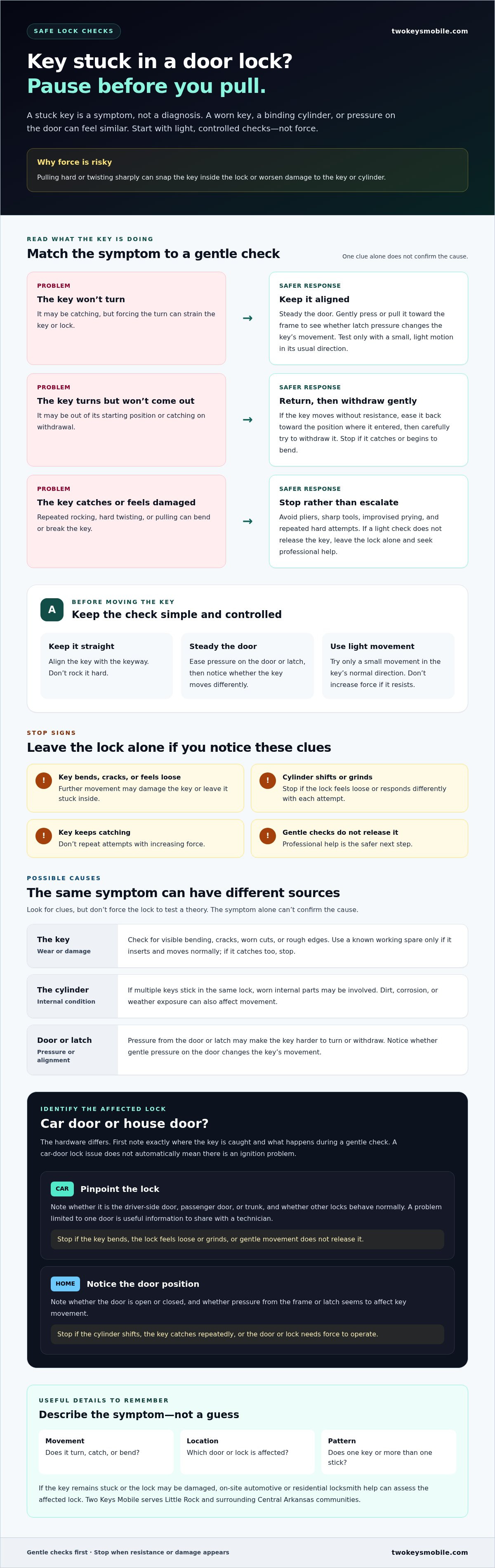
Keep the key straight and aligned with the keyway. Hold the door steady, then gently press or pull it toward the frame to see whether the latch is under pressure. While maintaining light pressure, test the key with a small movement in the direction it normally turns. If it moves, ease it back toward its starting position before carefully trying to withdraw it. Don’t rock it hard or repeat the attempt with increasing force.
Force can snap a key inside the lock or worsen damage to the key or cylinder. Avoid pliers, sharp tools, improvised prying, and repeated hard twisting. These can bend or break the key or put additional strain on the lock.
When to stop troubleshooting immediately
Stop if the key bends, cracks, or feels loose inside the lock. Stop as well if the cylinder shifts, grinds, or responds differently with each attempt. These are reasons to leave the lock alone, not to apply more force. If gentle checks don’t release the key, professional help is the safer next step.
- The key won’t turn: Keep it aligned and check whether slight pressure on the door changes how it moves. Don’t try to turn it by force.
- The key turns but won’t come out: If it moves without resistance, gently return it to the position where it entered and try withdrawing it carefully. Stop if it catches or starts to bend.
These are clues, not a diagnosis. If a key is stuck in a door lock after a gentle attempt, note whether it turns, catches, or bends, and which door is affected. That information can help a locksmith assess the problem without further straining the lock. Two Keys Mobile provides on-site automotive and residential locksmith assistance in Little Rock and surrounding Central Arkansas communities.
Why a Key Gets Stuck in a Door Lock
Several different problems can cause a key to catch, resist turning, or refuse to come out. “Key stuck in door lock” describes the symptom, not the diagnosis. The key, lock cylinder, and door or latch can all affect movement. Notice whether the issue happens with one key or more than one, but don’t force the lock to test a theory.
Could the key itself be worn, bent, or damaged?
Look for visible bending, cracks, worn cuts, or rough edges. These clues may indicate damage, but they don’t prove the key is the only cause. A key that worked before can start binding as its shape wears or changes. Use a known working spare only if it inserts and moves normally. If it catches too, stop rather than forcing it.
Could the lock cylinder or door alignment be the cause?
If multiple keys stick in the same lock, worn internal cylinder parts may be involved. Dirt, corrosion, or weather exposure can also affect movement, though the symptom alone can’t confirm the cause. Pressure from the door or latch may make a key harder to turn or withdraw. If the problem recurs, consider both the key and cylinder rather than assuming which one is at fault.
Note whether the issue happens with one key or several, and whether it recurs under particular conditions. Bob Vila’s guide to removing a stuck key discusses possible causes. Stop experimenting if the key or lock appears damaged.
Automotive and residential locks can show similar symptoms, but their hardware differs. A vehicle door lock issue doesn’t automatically mean there’s a problem with the ignition. If the cause remains unclear, an on-site assessment can help identify the affected lock. Two Keys Mobile’s automotive and residential locksmith services support drivers and homeowners in Little Rock and surrounding Central Arkansas communities.
A Stuck Key in a Car Door vs. a House Door
A key stuck in a door lock can feel much the same in a car or a house, but the hardware and useful clues differ. First identify exactly where the key is caught and what happens when you make a gentle check. Don’t take the lock apart. These details can help distinguish a key-cylinder issue from pressure on the door or a problem limited to one lock.
| Situation | What to note | Stop and get help if |
|---|---|---|
| Car door | Whether it’s the driver-side door, passenger door, or trunk lock, and whether other locks behave normally. | The key bends, the lock feels loose or grinds, or gentle movement doesn’t release it. |
| House door | Whether the door is open or closed, and whether pressure from the frame or latch seems to affect key movement. | The cylinder shifts, the key catches repeatedly, or the door or lock needs force to operate. |
If the key is stuck in a car door lock
Pinpoint the lock: driver-side door, passenger door, or trunk. If the issue keeps happening at only one door while another lock works normally, share that pattern with the technician. A key caught in a car door isn’t automatically an ignition problem. The door lock and ignition are separate locations, and the key’s behavior at one doesn’t establish what’s happening at the other.
If the key turns or withdraws normally but the remote buttons or fob aren’t working, that’s a separate symptom. The article “Car Key Fob Not Working? Fixes to Try Before Calling for Help” covers fob-related checks.
If the key is stuck in a house door lock
Note whether the door is open or closed. If it’s closed, consider whether pressure against the frame or latch changes how the key moves, but don’t push or pull the door hard to test it. A key that resists in both open and closed positions may point to a different issue than one that behaves differently when the door is shut. Either way, avoid forcing the key or removing lock hardware.
For more context on mobile help, see “On-Site Locksmith Service: What It Is and When to Call.” Keep your observations simple: which door or vehicle lock is affected, whether the key turns, and whether the issue repeats. That information helps focus an on-site assessment without risking additional damage.
What to Do If the Key Still Will Not Come Out
If gentle movement hasn’t released the key, stop trying to remove it. Stop immediately if it looks bent or cracked, feels loose, or won’t move without force. Repeated attempts to free a key stuck in a door lock can damage the key or cylinder further and make extraction more difficult. Leave the key in place rather than adding tools or taking the lock apart.
Record a few details for the locksmith. Note whether the problem began suddenly or has happened repeatedly, and whether the key turns, catches in one position, or bends. Identify the affected lock, such as a vehicle door or home entrance. If a spare key behaved differently during normal use, mention that, but don’t insert it now just to test the lock.
What information helps a locksmith diagnose the problem?
Share what you can see without handling the lock further. Note any visible damage to the key or cylinder and whether the door is open or closed. These details can help distinguish a key issue from a possible lock or door problem. Don’t remove hardware or keep testing the key to gather more information.
If you’re considering service costs, “How Much Does a Locksmith Cost? What Affects Your Quote” explains factors that can affect a quote. The work needed depends on the specific issue, so don’t assume every key-stuck situation requires the same fix.
When mobile locksmith help makes sense
Arrange professional help if the key remains trapped, breaks in the lock, or won’t move safely. Two Keys Mobile provides on-site automotive and residential locksmith assistance in Little Rock and surrounding Central Arkansas communities. For more about local mobile service, see “Mobile Locksmith Arkansas: Local Services and What to Expect in 2026.”
If the key is still stuck, contact Two Keys Mobile for mobile locksmith help.
How Two Keys Mobile Helps With a Key Stuck in a Door Lock
If gentle checks haven’t freed the key, stop before the situation gets harder to resolve. A key stuck in a door lock can involve the key, cylinder, or pressure on the door. The right next step depends on what’s happening at that specific lock. Two Keys Mobile provides mobile automotive and residential locksmith assistance at the affected location.
What on-site locksmith assistance can address
A technician can assess the key and lock where the problem occurred, whether that’s a vehicle door or a home entrance. Share whether the key turns, feels stuck, appears bent, or has broken, and whether the issue has happened before. These details explain the symptoms but don’t determine the repair in advance. The technician can evaluate the lock and discuss an appropriate next step based on its condition.
Automotive assistance includes automotive key replacement and emergency vehicle lockout service. For residential concerns, Two Keys Mobile provides emergency house lockout help, rekeying, and lock installation. A key that won’t come out may call for a different response than a lockout or a damaged key, so there isn’t one fix for every case. The goal is to assess the issue rather than guess or add strain to the lock.
Technicians bring more than 12 years of industry experience to automotive and residential locksmith work. That experience supports a measured approach: understand the symptoms, inspect the affected lock, and determine a practical next step without promising an outcome before assessing the problem.
Get help in Little Rock and surrounding communities
Two Keys Mobile is a mobile locksmith serving Little Rock and surrounding Central Arkansas communities. When describing the problem, specify whether the affected lock is on a vehicle or a home. Include the lock’s location, whether the key turns or moves at all, and any visible damage. Clear information helps focus the conversation and prepare for on-site assistance.
If the key remains trapped or appears damaged, leave it in place and avoid further attempts to force it out. Contact Two Keys Mobile for mobile locksmith help.
Keep the Key Safe and Choose a Calm Next Step
If you have a key stuck in door lock, resist the urge to pull harder. A bent or worn key, a problem inside the cylinder, or pressure from the door can cause similar symptoms, so one clue alone may not reveal the cause.
Try only gentle checks, and stop if the key bends, feels loose, or won’t move without force. Note which lock is affected and whether the key turns or catches. Those details can help a locksmith assess the issue without putting more strain on the key or lock.
When the key remains trapped, mobile professional help is a practical next step. Two Keys Mobile provides on-site automotive and residential locksmith assistance in Little Rock and surrounding areas. Its technicians bring more than 12 years of industry experience to the work.
Contact Two Keys Mobile for mobile locksmith help if you need support with a vehicle or home lock. Two Keys Mobile serves Little Rock, North Little Rock, Maumelle, Conway, Sherwood, Jacksonville, Cabot, Beebe, Bryant, Benton, East End, Mabelvale, and Mayflower. Avoid forcing the key and take the next step with confidence.
Frequently Asked Questions
Can I pull a key out of a door lock if it is stuck?
Try only gentle, controlled movement while keeping the key aligned. Don’t yank it, twist sharply, or grip it with pliers. Force can bend or break the key and may worsen damage inside the lock. If it doesn’t release easily, stop rather than repeating the attempt. Arrange professional locksmith help, especially if the key looks damaged or starts to feel loose.
Why is my key stuck in my car door lock?
A key stuck in a car door lock may be caused by a worn or damaged key, debris or corrosion in the cylinder, worn lock components, or pressure on the door or latch. One symptom can’t confirm the cause. Note whether the key turns, whether the problem keeps happening, and whether another key behaved differently during normal use. Share those details with a locksmith, and don’t force another test.
Can a bent key get stuck in a door lock?
Yes. A bent or worn key may bind as it enters, turns, or comes back out. Look for visible bending, cracks, or unusually worn edges, but treat these as clues rather than proof of the cause. Don’t try to straighten a key while it’s inside the lock. If it feels fragile or catches repeatedly, stop handling it to reduce the risk of breaking it in the cylinder.
Should I use WD-40 on a key stuck in a door lock?
Don’t assume a general-purpose spray is suitable for every lock. The appropriate lubricant can depend on the lock and its manufacturer’s guidance, and excess product may attract dirt or leave residue. Avoid spraying an unknown substance into the cylinder while the key is trapped. If gentle movement doesn’t release it, stop and have a locksmith assess the key and lock rather than adding more product.
What should I do if my key breaks inside the door lock?
Stop turning or pushing the broken piece. Don’t insert another key or a sharp tool to fish it out, since further attempts may push the fragment deeper or damage the cylinder. Note whether the lock is on a vehicle or a home, along with any visible damage. Then contact a locksmith for an assessment and appropriate key extraction. Keep the lock undisturbed until help is arranged.
Is a key stuck in a house door lock an emergency?
It depends on whether the entrance is secure and anyone is at risk. Don’t force the key or door. If you can’t secure the entrance, can’t safely enter, or someone is in immediate danger, prioritize personal safety and seek appropriate urgent assistance. Otherwise, stop repeated attempts and arrange locksmith help. Whether the door is open or closed, avoid removing lock hardware while the key is trapped.
When should I call a locksmith for a key stuck in a door lock?
Call when gentle movement doesn’t release the key, it’s bent or broken, the cylinder grinds or shifts, or the problem keeps returning. Stop sooner if the key looks likely to snap. Two Keys Mobile provides on-site automotive and residential locksmith assistance in Little Rock, North Little Rock, Maumelle, Conway, Sherwood, Jacksonville, Cabot, Beebe, Bryant, Benton, East End, Mabelvale, and Mayflower. Share which lock is affected and what the key does.


