
When your car key fob stopped working, the problem may be with the vehicle rather than the fob itself. If the doors won’t unlock or the engine won’t start, it’s easy to assume you need a replacement. A weak battery, signal interference, physical damage, or a vehicle-side issue can cause similar symptoms.
It’s frustrating to be locked out or unable to start your car, especially when you don’t know whether a simple battery change will help. Start with a few safe checks before arranging service. Avoid forcing the key or trying anything that could damage the fob, lock, or ignition.
This guide explains how to compare symptoms, check the battery, and test a spare fob. It also covers what to do if the vehicle still doesn’t respond and when an on-site automotive locksmith can help with key replacement or an ignition-related problem.
Key Takeaways
- Compare how one fob and any spare key behave to help narrow down whether the issue may be with a key or the vehicle.
- If your car key fob stopped working, try simple, non-damaging checks before deciding it needs replacement.
- Check your vehicle manual for its specific backup entry or starting procedure if the fob won’t respond.
- When safe checks don’t resolve the problem, mobile automotive key replacement or key fabrication can help in Little Rock and nearby communities.
Car Key Fob Stopped Working? Start With What Changed
A fob that suddenly won’t unlock the doors or authorize the engine to start can leave you stuck beside your vehicle. Before assuming the key needs replacing, note exactly what happens. A key fob is a small remote that sends a coded signal to a vehicle for access or other functions. The Remote keyless system overview explains the basic technology behind these signals.
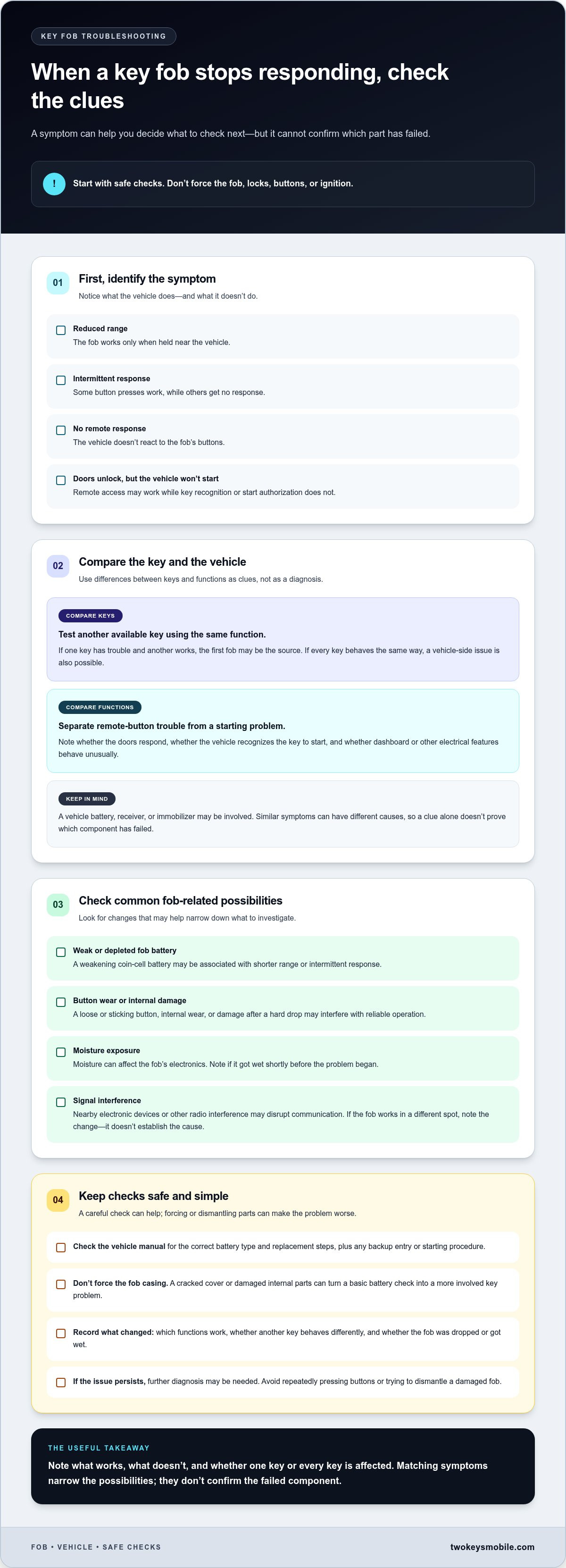
Look for a pattern rather than treating one failed button press as a diagnosis. Does the fob work only when you stand close to the car? Does it respond intermittently, or not at all? Does it unlock the doors but fail to start the vehicle? These clues can help you decide what to check next, but they don’t confirm which part has failed.
- Reduced range: The fob works only when held near the vehicle.
- Intermittent response: Some button presses work, while others get no response.
- No remote response: The vehicle doesn’t react to the fob’s buttons.
- Failed start authorization: The doors unlock, but the vehicle doesn’t recognize the key for starting.
Which key fob symptoms are you seeing?
Separate remote-button trouble from a starting problem. If the doors respond but the engine won’t start, the remote function may be working while the vehicle’s key-recognition or starting process is not. If the doors don’t respond either, the problem could affect the fob’s signal or the vehicle’s ability to receive it.
If you have another key, test it using the same function. Note whether it behaves the same way and whether the failure began suddenly or became more frequent over time. A sudden change and a gradual loss of range can point to different possibilities, but neither proves the cause.
Could the problem be the vehicle rather than the fob?
Yes. A weak vehicle battery may affect electrical systems, while a receiver problem may prevent the car from picking up the fob’s signal. The immobilizer, which helps the vehicle recognize an authorized key before starting, can also be involved. If one key fails and another works, the first fob may be the source, but that comparison is only a clue.
If every available key behaves the same way, consider a vehicle-side issue. If only one fob has trouble, its battery, buttons, or internal components may need attention. Similar symptoms can have different causes, so don’t force buttons, locks, or the ignition in an attempt to make the car respond.
Takeaway: Matching symptoms can narrow down the possibilities, but they can’t confirm which component has failed. Before choosing your next check, note what works, what doesn’t, and whether one key or every key is affected.
Why a Car Key Fob Stops Working: Common Causes to Consider
A fob can fail for several reasons, and the same symptom doesn’t always point to the same fault. A depleted coin-cell battery is one possibility. Damaged buttons, internal wear, moisture exposure, or a hard drop can also interfere with the signal. The vehicle’s power supply or receiver may be involved, too. Treat each as a possibility until simple checks narrow things down.
How a weak fob battery can affect its range
As a coin-cell battery weakens, the fob may respond only at close range or work intermittently. It might still unlock the car sometimes, making the problem seem unpredictable. Check your vehicle manual for the correct battery type and replacement steps before opening the fob. Don’t force the casing. A cracked cover or damaged internal parts can turn a basic battery check into a more involved key problem.
Physical wear can create similar trouble. A button that feels loose, sticks, or needs repeated pressure may not make reliable contact. A drop can damage components inside the casing even if the outside looks intact, and moisture exposure can affect the electronics. If the fob was dropped or got wet shortly before the failure, note that detail rather than repeatedly pressing the buttons or trying to dismantle it.
Signal interference is another possibility. Nearby electronic devices or other sources of radio interference can disrupt communication between a fob and a vehicle. If the fob works in a different spot, that change is useful information, but it doesn’t establish the cause. If the problem persists across locations or after you’ve checked the battery, further diagnosis may be needed.
When the key, receiver, or immobilizer may be involved
Remote unlocking and start authorization are separate functions. The doors may respond to the fob while the immobilizer fails to recognize the key for starting. A vehicle battery issue can also resemble a key problem if the car’s electrical systems aren’t responding normally. If more than one key has the same trouble, a vehicle-side issue is one possibility, not proof that the receiver or immobilizer has failed.
Remote-control trouble affects access; start-authorization trouble affects whether the vehicle recognizes the key to start. This distinction helps describe the issue clearly, but a symptom alone can’t identify a failed component. Note whether the remote buttons work, whether the dashboard or other electrical features behave unusually, and whether another available key acts differently.
If your car key fob stopped working after a battery check or appears damaged, avoid forcing the fob or ignition. Two Keys Mobile provides mobile automotive key replacement and key fabrication in Little Rock and surrounding communities. These services are a practical next step when safe checks don’t resolve a persistent key problem.
Fob Battery, Spare Key, or Vehicle Fault? Compare the Clues
Use the pattern of the failure to decide what to check next, not to declare a diagnosis. A shorter operating range or inconsistent button response may fit a weak battery or fob damage. If multiple keys fail in the same way, the vehicle’s power supply or receiver may also be involved. These clues can guide troubleshooting, but they don’t identify the failed component on their own.
Symptom: The fob works only close to the vehicle. Possible source: A weakening fob battery or signal interference. Safe next check: Try it from another nearby location and consult the vehicle manual for battery guidance.
Symptom: Buttons respond intermittently or only with repeated presses. Possible source: A weak battery, worn button, or internal fob damage. Safe next check: Compare with a spare key, if available, and note which buttons fail.
Symptom: The remote unlocks the doors, but the vehicle won’t start. Possible source: A start-authorization, vehicle-battery, or key-recognition issue. Safe next check: Follow the vehicle manual’s backup starting procedure. Don’t try to bypass the immobilizer.
Symptom: Several available keys stop working. Possible source: A vehicle-side power or receiver problem, among other possibilities. Safe next check: Note whether the vehicle’s other electrical features behave normally.
What does a spare key tell you?
Test the spare once using the same function that failed, such as unlocking or starting. If it works while the first fob doesn’t, the problem may be limited to that fob. If both behave alike, the vehicle may be part of the issue. A working spare doesn’t show whether the original fob needs a battery, repair, or replacement. Keep the working key available and avoid unnecessary repeated attempts.
When several symptoms point beyond a simple battery issue
If the fob still fails after a correct battery replacement, further diagnosis may be needed. Pay attention to whether the doors respond separately from the engine-start function, since access and electronic start authorization are different functions. Don’t attempt to bypass the immobilizer or open vehicle wiring. These steps can cause damage and won’t reliably identify the fault.
Keep a brief record of what you tested: which key you used, which buttons worked, and whether the vehicle responded. This helps distinguish a single-fob pattern from a problem affecting every available key. For example, a spare that unlocks the doors but also fails to authorize starting presents a different pattern from a spare that works normally.
If your car key fob stopped working despite safe checks, an automotive key technician may need to assess the key and vehicle. Comparing symptoms is a useful starting point, not a substitute for diagnosis when the cause remains unclear.
What to Try Safely When Your Car Key Fob Stops Working
If your car key fob stopped working, take a few careful steps before deciding what needs repair. Stop if anything resists. Forcing the casing, key blade, door, or ignition can cause damage and make the situation harder to resolve.
- Move away from possible signal interference. Step a short distance from other electronics or nearby sources of interference, then try the fob once more. Note whether the response changes.
- Check your vehicle manual. Look for the manufacturer’s backup entry or starting procedure. Some vehicles have a specific way to unlock or start the car when the remote isn’t responding. Follow the instructions for your vehicle rather than improvising.
- Try a spare key if you have one. Use it for the same function that failed, then compare the result with the original. A different response can help narrow down whether the problem may be key-side or vehicle-side, but it won’t confirm the exact fault.
- Inspect the fob from the outside. Look for a cracked casing, a stuck button, or visible damage. Don’t pry open a sealed or delicate fob. If the manual describes a battery replacement, follow its steps and use the specified battery type.
- Record what happens. Note which buttons work, whether the locks respond, whether the vehicle starts, and how the spare behaves. This gives a technician useful details without repeated attempts that could drain the battery or risk damage.
Simple checks before arranging key service
Limit your checks to what the manual supports. If it explains a battery replacement or pairing procedure, follow those instructions carefully. Avoid forcing the casing or guessing at a reset sequence. Record whether the fob responds consistently and whether another key behaves differently. Clear observations can help distinguish a fob issue from a vehicle-side concern.
When should you stop troubleshooting?
Stop if both keys fail, the vehicle won’t start, or a key blade or component won’t move normally. If you can’t access or secure the vehicle, arrange help rather than trying to force entry or alter wiring. Don’t attempt to bypass the immobilizer. Visual inspection and manual-guided steps are appropriate checks; immobilizer and wiring work require professional diagnosis.
If these checks don’t restore access or starting, mobile automotive key help can be the practical next step. Two Keys Mobile provides on-site automotive key replacement and key fabrication in Little Rock and surrounding communities. Arrange mobile automotive key help when the fob still won’t respond.
Need Key Help in Little Rock? How a Mobile Locksmith Can Help
If basic checks haven’t resolved the issue, a mobile automotive locksmith can assess the key problem and determine whether replacement or key fabrication is needed. This can help when a fob remains unresponsive, a key is damaged, or you can’t access or start the vehicle with an available key. Avoid forcing the fob or ignition while arranging help.
Two Keys Mobile provides on-site automotive key replacement and key fabrication in Little Rock and surrounding communities, including North Little Rock, Conway, and Maumelle. Its technicians each have more than 12 years of industry experience. Sharing the symptoms and checks you’ve already tried helps explain the problem clearly and gives the technician useful context.
What information helps explain the key problem?
Have the vehicle’s make, model, and year ready when requesting help. Describe what the fob does, whether the doors respond, and whether the vehicle starts. Mention any recent battery change and whether a spare key works. These details help the technician understand the reported issue without assuming that one symptom proves a specific component has failed.
If possible, keep any working key available. Note which buttons respond and whether the problem began suddenly or developed over time. If the vehicle manual provided a backup entry or starting procedure, mention whether you tried it and what happened. Avoid repeated attempts that require force, and don’t try to open vehicle wiring or bypass the immobilizer. Clear details can make the next steps more focused.
When key replacement or ignition service may be needed
A broken, lost, or unusable key may call for automotive key replacement or fabrication. That’s different from a remote-button issue. If the key is recognized but the ignition itself won’t operate as expected, ignition repair or replacement may be relevant. Two Keys Mobile provides ignition repair and replacement, as well as automotive key replacement and fabrication. For more background, see the Car Key Replacement guide.
Keep the distinction in mind: a fob may have a remote-control problem, while an ignition concern involves the vehicle’s starting hardware. The right next step depends on what the key does and how the vehicle responds. You don’t need to force a diagnosis yourself. Share the symptoms and checks you performed so the key or ignition concern can guide the assessment.
If the car key fob stopped working and safe checks haven’t restored access or starting, Two Keys Mobile provides mobile automotive key help. Request mobile car key replacement help in Little Rock, North Little Rock, Conway, or Maumelle.
Take the Next Step With Confidence
A car key fob stopped working can disrupt your plans, but you don’t have to guess at the cause or force a fix. Use what you’ve observed to explain the issue clearly, then choose a next step that protects your key and vehicle. Once the immediate problem is handled, note your vehicle’s backup entry instructions and keep track of which key works. That preparation can make a future problem less stressful.
If the fob remains unresponsive or you can’t access or start your vehicle, Two Keys Mobile can help with on-site automotive key replacement and key fabrication. Its technicians each have more than 12 years of industry experience and serve Little Rock and surrounding communities.
Contact Two Keys Mobile for on-site automotive key help to take the next step toward getting back on the road.
Frequently Asked Questions
Can a car key fob stop working because of a dead battery?
Yes. A weak or depleted fob battery can make a car key fob stop working, especially if the response becomes inconsistent or the usable range shrinks. Those signs can also have other causes, such as worn buttons or a vehicle-side fault. Check the owner’s manual for the correct battery and replacement method. If a fresh, correctly installed battery doesn’t help, avoid guessing at further fixes and have the key and vehicle assessed.
Will my car start if the key fob battery is dead?
It depends on the vehicle. Some models have a specific backup method for starting when the fob battery is depleted, while others use different procedures. Look in the owner’s manual for instructions for your exact vehicle, including where to place the fob if required. Don’t try random locations or instructions meant for another model. If the car still won’t recognize the key, the issue may need professional diagnosis.
How do I know if my key fob needs reprogramming?
You can’t confirm a programming problem from symptoms alone. If the fob stops communicating after a battery change, programming may be one possibility, but an incorrectly installed battery, damaged electronics, or a vehicle-side fault can look similar. Follow only pairing steps provided in your owner’s manual. If those instructions don’t restore the fob, a technician can assess both the key and vehicle rather than relying on trial and error.
Can my car battery make the key fob stop working?
Yes. A weak or discharged vehicle battery can affect the car’s electrical response and make a working fob seem faulty. Look for other signs, such as dim dashboard lights or difficulty starting, rather than focusing only on the remote. Avoid repeated start attempts if the vehicle’s electrical system seems weak. A technician can help distinguish a vehicle power problem from a key or receiver issue and identify an appropriate next step.
Why does my key fob work sometimes but not every time?
Intermittent response can come from a weakening fob battery, worn buttons, signal interference, or a vehicle-side issue. Notice whether the failure changes with location, distance, or the button you press. For example, if only one button is unreliable, mention that detail. A spare key can provide a useful comparison, but it won’t pinpoint the failed component. If the pattern continues, arrange an assessment instead of repeatedly pressing the fob.
Can I replace a car key fob battery myself?
Often, yes, if the fob has a replaceable battery and the owner’s manual explains how to access it. Use the specified battery and follow the instructions for your model. Don’t pry at a casing that won’t open as directed, since forcing it can damage the shell or electronics. If the fob is sealed, visibly damaged, or still doesn’t work after replacement, stop and seek professional help.
What should I do if my car key fob will not unlock or start the car?
Move away from possible signal interference, then check the manual for your vehicle’s backup entry or starting procedure. If you have a spare, compare its response without forcing the key or lock. If the car remains inaccessible or won’t start, contact a mobile automotive locksmith for assistance. Two Keys Mobile serves Little Rock, North Little Rock, Maumelle, Conway, Sherwood, Jacksonville, Cabot, Beebe, Bryant, Benton, East End, Mabelvale, and Mayflower.


